|
|




GIÁO DỤC là việc LUÔN LUÔN CẦN THIẾT,
MỌI NƠI MỌI LÚC
(cha thánh lập dòng LASAN)
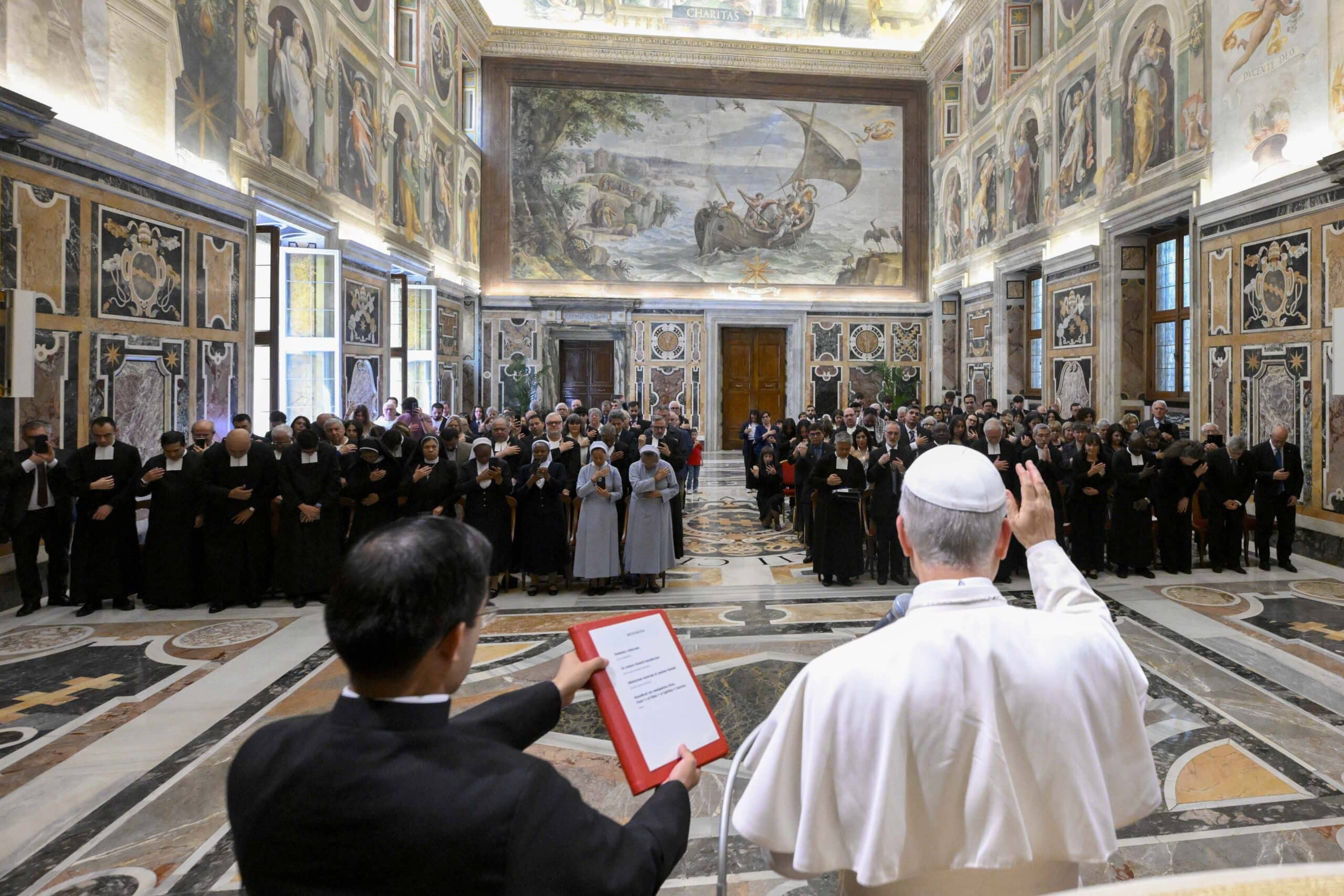
DILEXI TE,
by Pope LEO XIV |
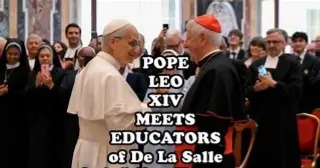
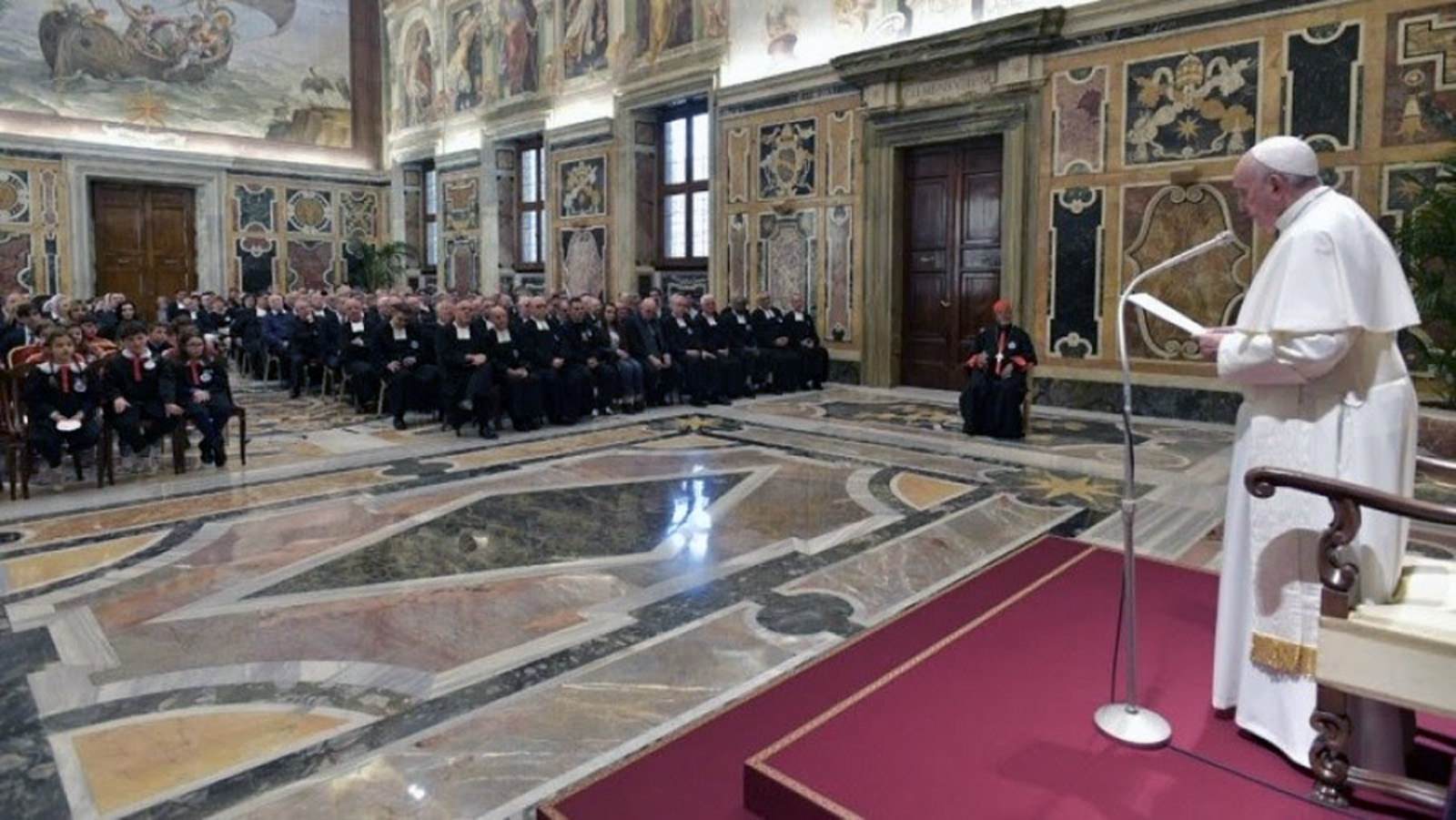 Nói với các nhà giáo dục, '"Con người ngày nay không chỉ cần những người thầy, mà họ cần những chứng nhân. Và nếu họ lắng nghe những người thầy, đó là vì họ là những chứng nhân sống động của đức tin và tình yêu” Đức Giáo Hoàng Phanxicô nhắc lại rằng giáo dục luôn là một trong những biểu hiện cao nhất của đức ái Kitô giáo. |
| Tiếng Việt | en Francais | In English |
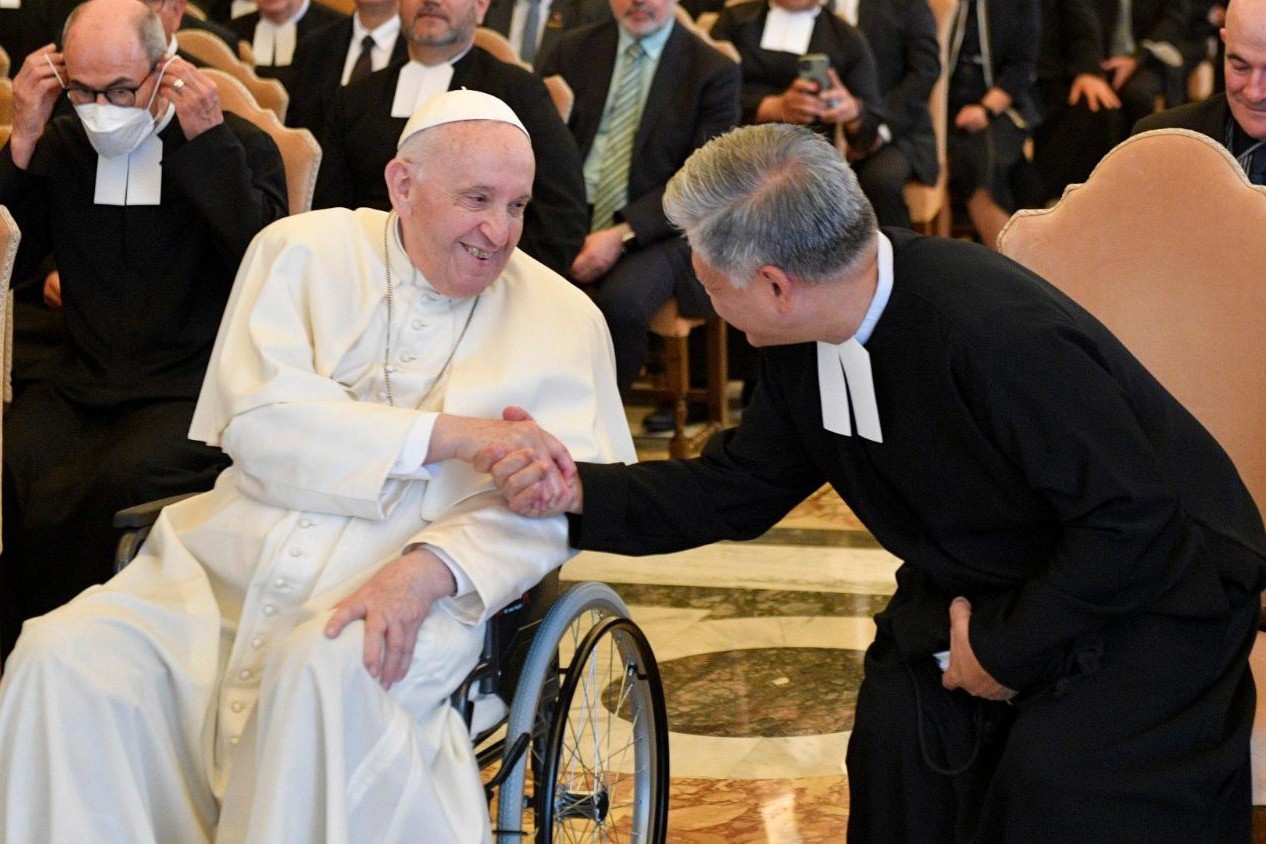 |
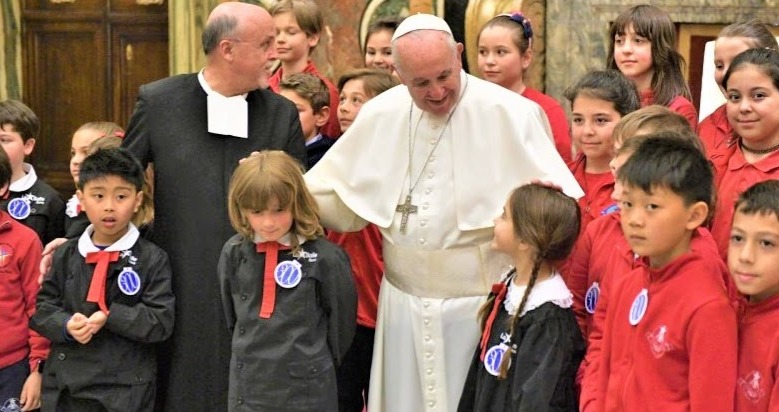
Pope Francis and Christian Brothers
Pope Francis has shown a deep commitment to
the Christian Brothers, particularly through his interactions with the La Mennais Brothers and the De La Salle Brothers. He has encouraged them to be compassionate and loving fathers to the marginalized, especially children affected by war. He has also emphasized the importance of education as a means to transform lives and provide hope to those in need. His messages resonate with the values and missions of the Christian Brothers, who are dedicated to serving humanity and promoting peace and justice.
|
 |
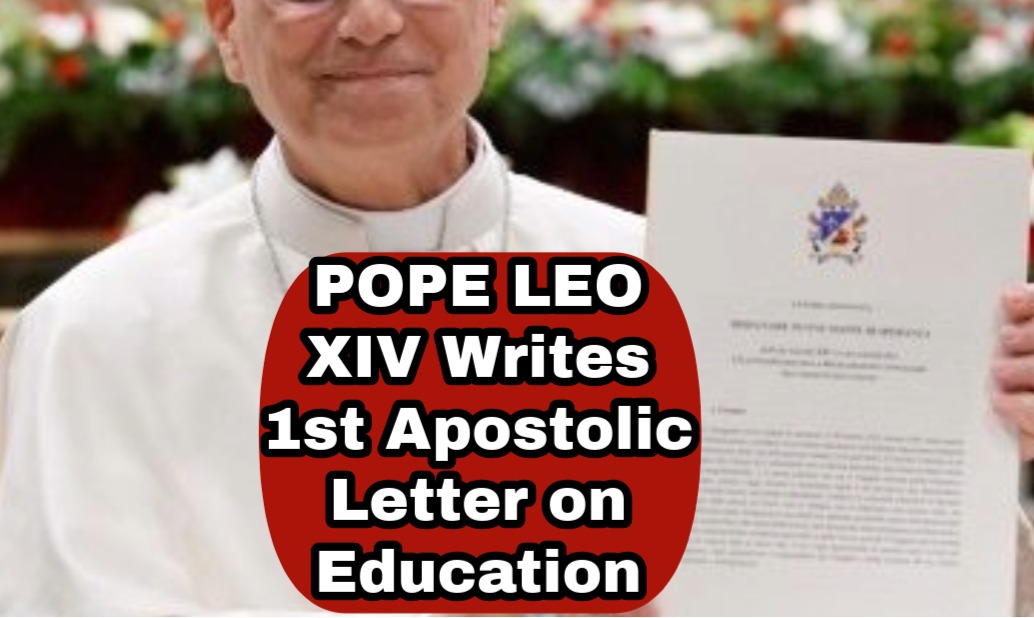 |
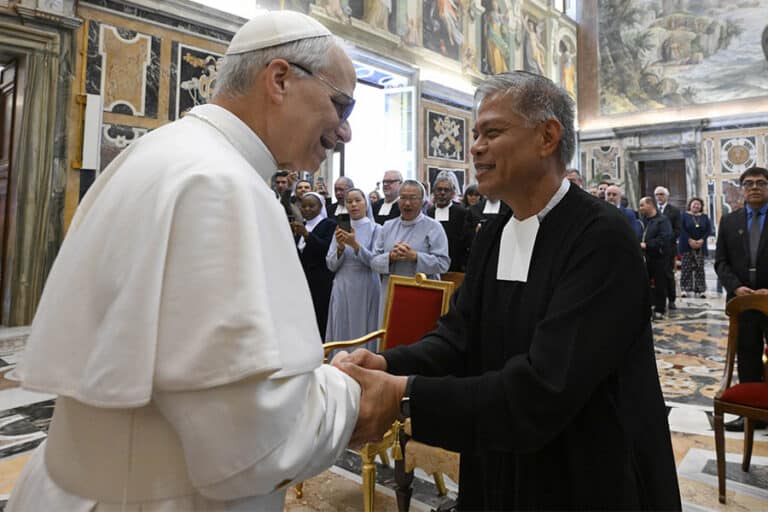
to the Christian Brothers of the Lasallian Schools marked a significant moment in their history. The Pope commended the Brothers for their dedication to education and encouraged them to continue inspiring joyful and fruitful paths of holiness among the young. He highlighted the Brothers' historical contributions to education and their ongoing commitment to the ministry of education, particularly for young people and the poor. The Pope's address was a heartfelt reminder of the Brothers' role as witnesses of hope and builders of peace, respecially among the most vulnerable. |
 |
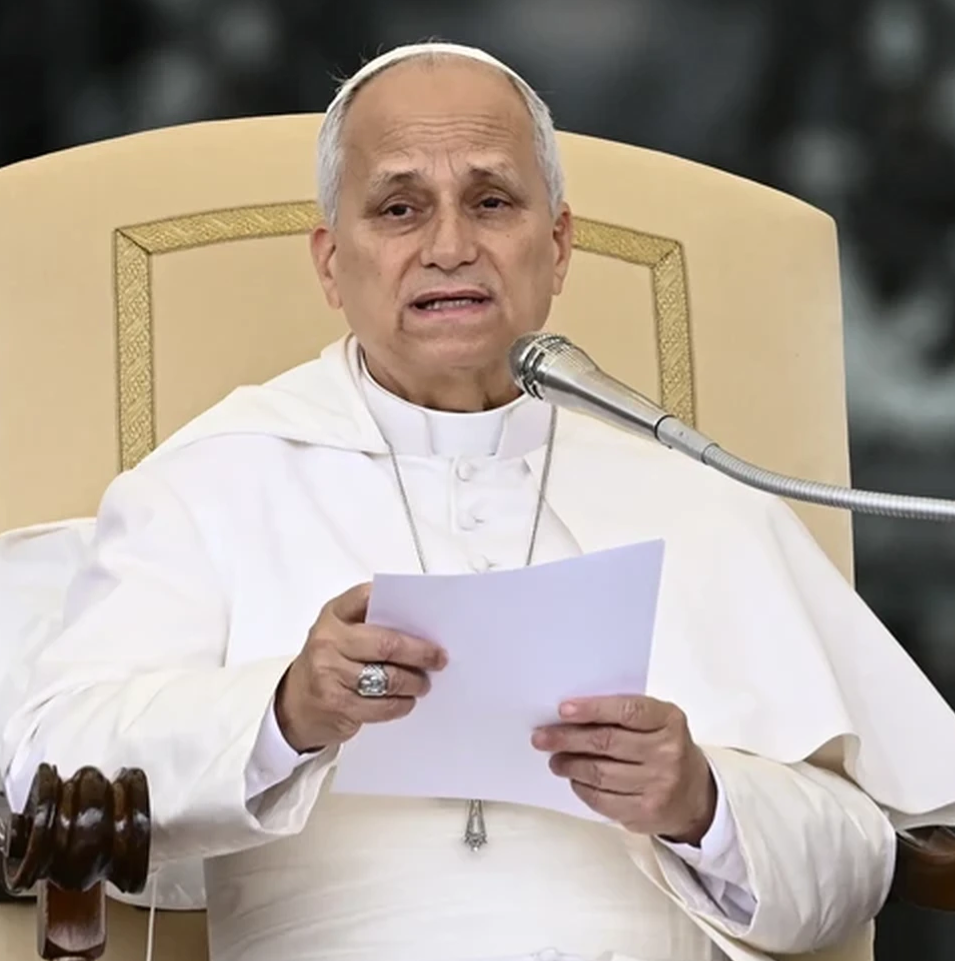 |
Seminary leaders weigh AI use as pope praises liberty work
At a global webinar, Pope Leo XIV praised the Becket Fund’s record of protecting religious liberty for individuals and communities. The developments reflect how leaders are engaging with emerging technologies while upholding protections for belief. Educators outline AI’s limits in theology
During an International Council for
Evangelical Theological Education
webinar, Walker Tzeng explained that
generative AI produces text by
statistical prediction without
genuine understanding, making it
useful for synthesizing material but
unable to convey faith rooted in
personal relationship with God. John
Dyer framed the issue through
biblical themes such as creation,
the image of God, and the fall,
cautioning against replacing human
growth with machine output and
urging the establishment of ethical
guardrails
|
 |
 |
Intersecting themes of faith, rights, and change
The emphasis
on integrating AI into
theological education
alongside the defense of
religious liberty highlights
the complex challenges
facing faith communities. As
seminaries work to
incorporate technology
without losing formative
depth, legal advocates
stress the importance of
preserving space for diverse
beliefs. Together, these
efforts point toward a
future where religious
vitality relies on both
thoughtful engagement with
new tools and steadfast
protection of conscience
|
  |
|
A clear call to action in educationHe said that a clear call to action in educational terms from the encyclical “is to be more careful about how we use this technology to build upon and augment the individuality of people. And what makes them unique and special is something that should be celebrated, not homogenized,” Rowe said. The Australian professor underlined that the risk in academia is a frantic search for answers in technology, while the pope provides a genuinely human answer to big concerns. “I have seen this technology swallow itself up every three to six months with something new. And so for me, it points to the fact that we need to have a set of first principles as guideposts to pivot from. And that, to me, is what I believe was missing,” he said of the encyclical’s takeaways, which he said are “very powerful call to action.” Using AI as a tool requires vigilanceKathy Ann Mills, a professor at Australian Catholic University who researches — among other fields — digital and media practices, said that the education world can play “a role in teaching children and young people how to use technology in responsible ways, and as Pope Leo XIV reminds us, “to use AI as a valuable tool, but in a way that requires vigilance,” MIlls underlined. “Importantly, he points to some of the dangers of AI that can be misleading, such as creating illusions of friendship with a personal subject, which research shows is a danger when humans develop emotional bonds with machines,” she said in a written message to OSV News. “Children also have developing understandings of AI, with different or immature ways of thinking about human-like machines than older children and adults,” she wrote. “For example, the tendency to anthropomorphize artificial agents, particularly when AI has a human-like persona, face, backstory or physical form, like robots, changes over time. So this is an example of how teachers and parents play a vital role in guiding children’s developing understandings of AI,” she emphasized. Pope Leo also talks in his encyclical about legislators intervening to set appropriate age limits, holding service providers accountable “rather than shifting the whole burden of control onto families,” and providing specific protections “against all forms of online sexual exploitation and violence.”
Pope Leo's Eucharistic answer to the age of AI
|
A harmful early digital exposureThe encyclical also outlines the severe psychological and social harms of early and unsupervised digital exposure, which can negatively impact sleep, attention spans and emotional control, while opening the door to online exploitation, cyberbullying and manipulation by AI tools. Acknowledging the immense pressure on the modern family, the pope conceded that “it is difficult for parents by themselves to resist the influence of business models that monetize attention and time.” Because of that, he called for an “alliance among policy-makers, educational institutions and families that is capable of concretely supporting adults in this task.” What he said is needed are “far-sighted public policies … to oppose the immediate interests of platforms — concentrated in a few hands — when they conflict with the wellbeing of minors.” ‘Precious treasure’ in need of protectionHe calls children and adolescents “a precious treasure” in need of such protection, but also urges that they are taught “how to recognize manipulation, defend their dignity and respect that of others in digital environments.” “Research shows that AI systems contain biases that need to be challenged,” Mills said, pointing to Pope Leo’s words: “Ethical discernment cannot be limited to asking whether we are using a system for good or bad purposes; it must also examine how that system is designed and what vision of the human person and society is embedded in the data and models that guide it.” School, Pope Leo said, “is the place where new generations can learn to seek and love the truth, to reflect on the meaning of life and to recognize the dignity of every person” — but that same school, faced with the digital age, seems weak. “Even young children can begin to develop a sense of social justice, learning to identify when the output undermines social justice and the common good,” Mills pointed out. “They can see which voices are missing, whose views and values dominate, and whose views are silenced. They can also learn to think about ‘who’ benefits from the technologies,” she said.
|
|
Need for new educational awareness, formationFor families and schools, the pope said, “there is a growing need for new educational awareness and for formation concerning the proper and critical use of digital tools, AI and online commercial and financial platforms.” In universities, on the other hand, “the principal challenge lies in the integration of knowledge, so as to cultivate the capacity to connect and synthesize knowledge in order to grasp complexity, while also forming the skills necessary for verifying facts.” Pope Leo said technology “has the power to heal, connect, educate and protect our common home; but it can also divide, exclude and generate new forms of injustice.” Within that frame “the organization of schools, physical spaces, evaluation methods and the role of teachers themselves must be rethought in order to promote an authentically integral education that addresses every dimension of the person,” the encyclical outlined. In a rather unbalanced race between education and technology, teachers also need to be supported, the pope said, stressing it is “necessary to support the ongoing formation of teachers throughout their professional lives, so that they can engage positively with new technologies, helping students to use them responsibly, critically Support for teachersand creatively, rather than passively succumbing to their influence.” Many educators, Pope Leo said, “already report signs of dehumanization, where people may ‘know many things’ but struggle to find direction in their lives, partly due to an inability to connect information with deeper knowledge or maintain a sense of purpose.” As an answer to that, “a genuinely healthy attitude is needed, requiring rhythms that incorporate silence, in depth study, reading and judicious analysis, for without these elements inner freedom may be compromised.” |
Critical thinking is keyFor Rowe, the pope pointing out critical thinking is key. “Students need to be able to think for themselves before they start to defer to technology to do the thinking for them,” he told OSV News. In an AI era, “you can fall asleep on a keyboard and wake up to a Shakespearean sonnet and impress yourself, and make yourself think that you’re a great writer, even though you may not know how to do anything but put in a little sloppy text prompt,” Rowe underlined. The big challenge therefore is to meet that aspect of human dignity “so that we still value knowledge and people who bear knowledge,” he said. “There’s something sacred in that and how teachers and students interact when they build knowledge together, and I think there’s a big challenge moving forward in what that means for education.” Families, schools, communities, institutionsThe Church’s social doctrine, Pope Leo said, “invites families, schools, Christian communities and public institutions to form a renewed educational alliance,” which he proposes in his encyclical. In this alliance students should be taught “a sense of moderation and limits; the recognition of the right of others, as well as of future generations, to enjoy the goods that are either provided for us or made available by human ingenuity; freedom and responsibility; and a sense of transcendence and the common good.” Schools therefore, Pope Leo wrote, “are not called to follow the pace of the digital world,” but to “offer that which the digital sphere by itself cannot provide, namely a shared time for learning and developing trustworthy relationships.” |
|
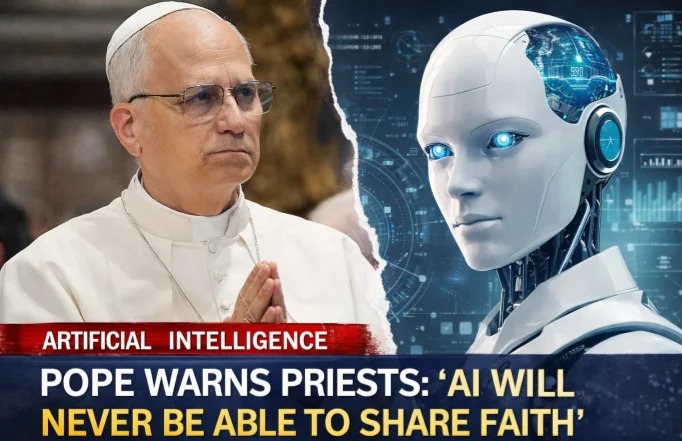
The Pope has spoken previously about regulating AI, imploring industry leaders to more carefully consider the ethical implications of AI in their work. Last May, when explaining why he chose the name Leo, the pope specifically cited AI as one of his primary reasons. "There are different reasons for this, but mainly because Pope Leo XIII in his historic Encyclical Rerum Novarum addressed the social question in the context of the first great industrial revolution. In our own day, the Church offers to everyone the treasury of her social teaching in response to another industrial revolution and to developments in the field of artificial intelligence that pose new challenges for the defence of human dignity, justice and labour." The encyclical goes further, diving into AI's impact on jobs, education, and child safety in a message to leaders around the world. "We need moral voices that the incentives cannot bend," Olah said. "Today is just the beginning — the start of a long collaboration between those of us who are building this and those who can see what we, from the inside, cannot." Here are the main takeaways from the Holy See: AI is a threat to workersThe Catholic Church is worried about AI taking over jobs, too. Tying "Magnifica Humanitas" to other labor-related encyclicals throughout the Church's history, Pope Leo calls the automation of jobs a threat to workers, citing widespread deskilling and greater labor surveillance with AI systems in place. "Today, the convergence of automation, robotics and AI is rapidly transforming the very structure of work. It is said that this will bring great improvements for everyone. In reality, however, the 'new ways' of working are not necessarily better."
|
Don't believe the AI hypeThe leader warned that current AI hype is akin to a modern Tower of Babel, comparing the pursuit of advanced technology to the biblical story of a group of humans trying to reach heaven. He called on leaders to temper their ambition and recenter humanity. He also joined a growing number of child safety advocates and regulators who want to address screen time and its effect on children: "Psychological and psychiatric literature has documented with growing insistence how early and unsupervised exposure to digital devices and social media can negatively impact sleep, attention span, control of emotions and relationships, especially during the most vulnerable stages of life, at times with tragic consequences." In addition, Leo called out AI's role in exacerbating misinformation and devaluing critical thinking, especially in schools, saying the technology has a dehumanizing force in the classroom. Big Tech has created a "new form of slavery"While simultaneously issuing the first formal condemnation of the transatlantic slave trade, Pope Leo called exploitative tech manufacturing processes and global AI training a "new form of slavery." "In some regions of the world, children and adolescents work in dangerous conditions, crushing the materials from which rare earth elements are extracted...The bodies of these people are scarred, injured and worn down so that computational flow may continue uninterruptedly," he said. "This reality deeply challenges the moral conscience of our time."
|
****************************************************************************************************************************
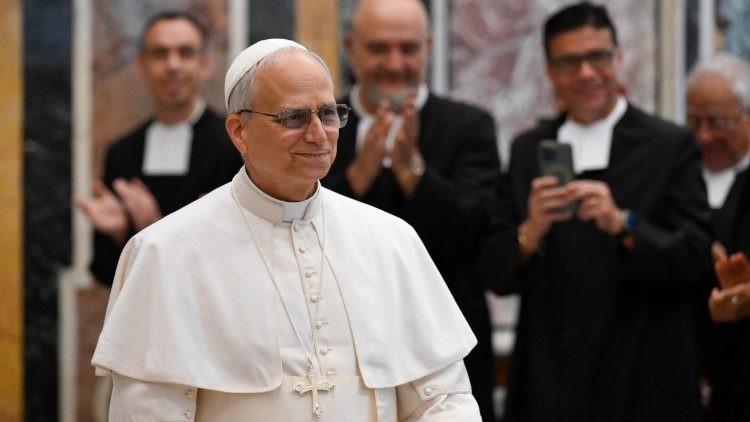 |
Nói với các nhà giáo dục, Đức Giáo Hoàng Phanxicô
nhắc lại rằng
Được truyền cảm hứng từ cùng một sự
nhạy cảm,
De La Salle coi lớp học là nơi phát
triển con người,
|
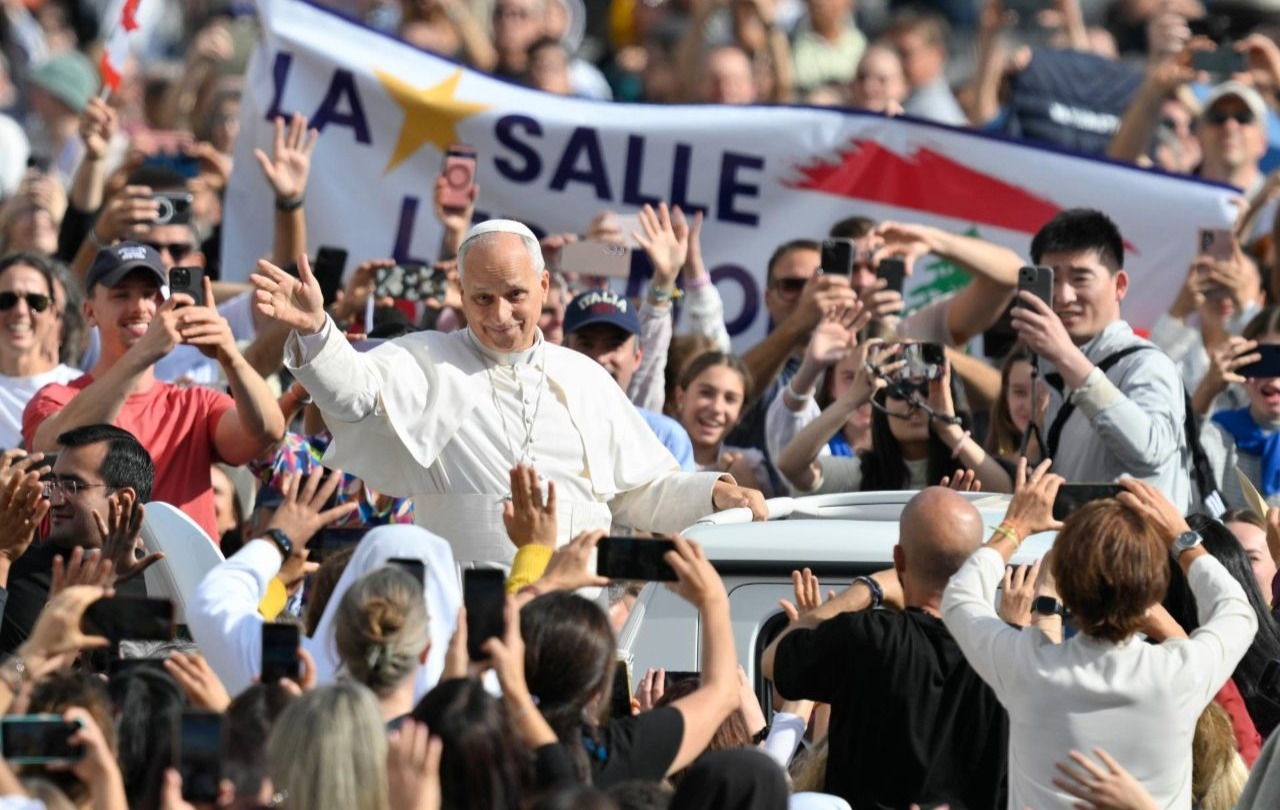 |
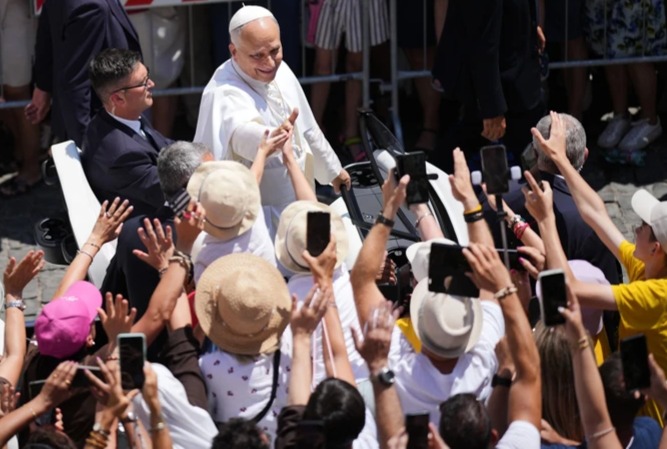
Đức Giáo Hoàng gặp gỡ 15.000 giáo sư, giáo chức và sinh viên học sinh tại Quảng trường Thánh Phêrô ở Rome nhân dịp Năm Thánh Giáo dục Thế giới và kêu gọi các giáo chức kết nối với "bản ngã nội tâm" của sinh viên học sinh, bởi vì nếu không có sự gặp gỡ sâu sắc với các em, "bất kỳ đề xuất giáo dục nào cũng sẽ thất bại." Ngài cảnh báo rằng trí tuệ nhân tạo, với “kiến thức kỹ thuật, lạnh lùng và chuẩn mực,” có nguy cơ cô lập những học sinh vốn đã bị cô lập hơn nữa, khiến các em ảo tưởng rằng mình không cần người khác - hoặc tệ hơn, rằng mình không xứng đáng với họ. Trong bối cảnh này, Đức Giáo Hoàng nói, vai trò của nhà giáo dục là sự gắn kết con người - “và chính niềm vui của quá trình giáo dục mang đậm tính nhân văn, một ngọn lửa kết nối các tâm hồn lại với nhau và làm cho chúng nên một.” |
Pope Leo: AI
must help and not hinder children and young people's
development
When faced with the "exceptional
product of human genius" which is artificial intelligence,
Pope Leo XIV warns it raises pressing questions, must never
forget human dignity,
and cannot interfere with the proper human and neurological
development of young people and children.
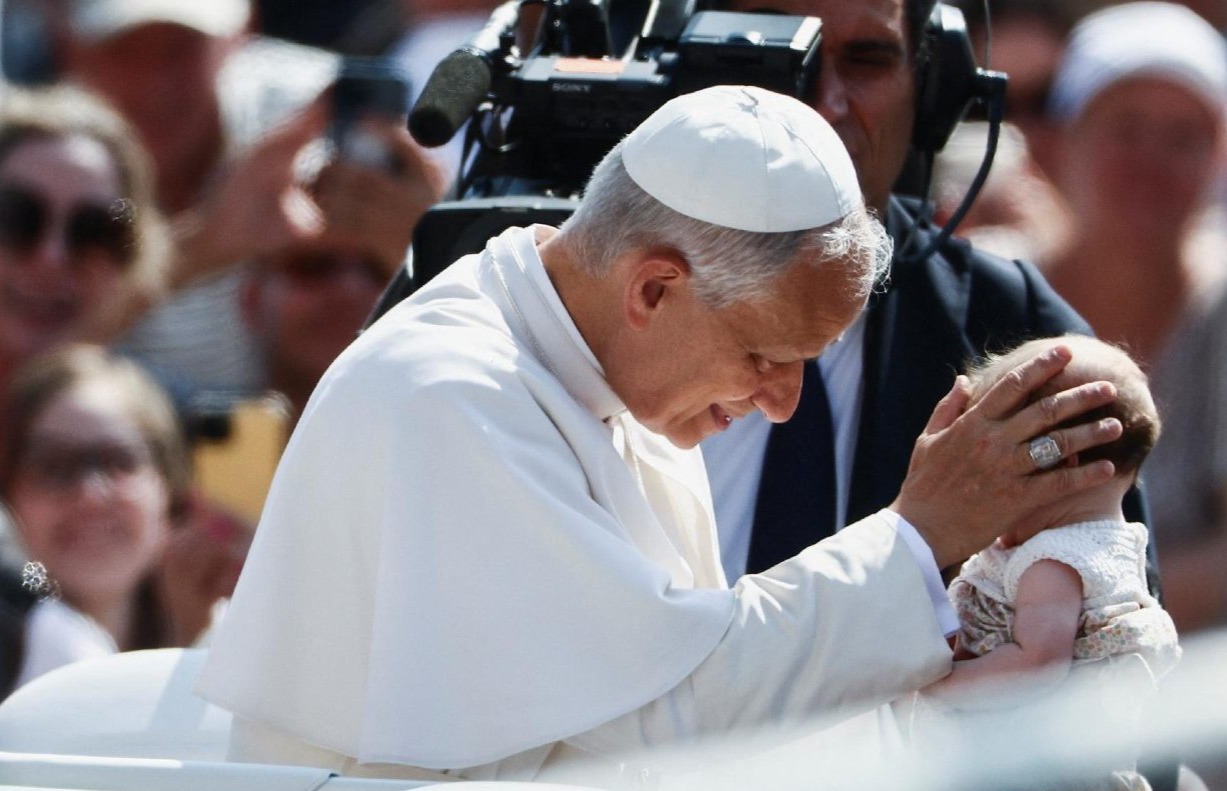
“All of us, I am sure,
are concerned for children and young people,
and the possible consequences of the use of AI on their
intellectual and neurological development
"Our youth," he insisted,
"must be helped, and not hindered,
in their journey towards maturity and true responsibility,"
underscoring they "are our hope for the future."
"Society’s well-being," he also underscored,
"depends upon their being given the ability to develop their
God-given gifts and capabilities,
and to respond to the demands of the times and the needs of
others with a free and generous spirit."